




I always thought if I took good notes, highlighted the most important stuff during the first review, and then studied those parts, I’d ace my exams. Unfortunately, that wasn’t how it played out.
That’s when I started looking into different study methods. What I found out is that there are a lot, and they all help you learn different types of material.
I’ll cover the top 10 study methods, so you can study smarter, remember more, and start acing your exams.
| If you want to... | Try these study methods |
| Memorize facts, terms, & definitions. | Active recall, Spaced repetition |
| Remember information using visual cues. | Dual coding, Mind Palace |
| Explain a concept in your own words. | Feynman technique, Self-explanation |
| Understand why something is true. | Elaborative interrogation |
| Connect ideas & see the bigger picture. | Mind mapping |
| Get better at choosing the right approach to a problem. | Interleaving |
| Understand & retain information from textbooks. | SQ3R |
What makes a study method effective?
When you read through your notes, it does help you get more familiar with the material, but that doesn’t always mean that you’ll remember it.
The trick is to find ways to actively engage with what you’re learning and give yourself opportunities to revisit it over time.
For example, you could use flashcards, test yourself with short quizzes, try to explain things without looking at your notes, or even connect ideas with visuals. What you don’t want to do is rely on one cramming session the night before to fully prepare you for your exams.
Each of the study methods below works in a different way, so you might find that you use one to help with science classes, but a different one to learn history. Let’s take a look at what each of them does best.
10 study methods to help you learn more effectively
I’ve grouped the top ten study methods into three categories: memorization, deep understanding, and managing complex information, but even in those areas, each method is a little different.
(Note that study methods are different than note-taking methods. You can take a look at our guide on those over here.)
I’ll give you a quick overview of each study method, what it’s best for, and why it works, but if you want more detail and step-by-step instructions and tips for putting them into practice, check out our free 10 Ways to Study guide.
Personally, I use the iPad for both note-taking and studying because it’s way more convenient to have everything in one place. Plus, there are tons of study apps that make it easy to use most of these methods. Along the way, I’ll tell you my favorite apps for each method, and why they work well.
Study methods for memorization
If you’re trying to remember facts, definitions, dates, or any other details for an exam, these methods are the best options. Some focus on recalling information from memory, while others use visuals or explanations to make it easier to remember.
Active recall
| What it is | Retrieving information from memory without looking at your notes. |
| Best for | Remembering facts, definitions, formulas, vocabulary, and key concepts. |
Active recall is, in my opinion, the best study method out there for remembering information. In fact, you’ve probably already used it without even knowing it. That’s because flashcards are a form of active recall, and I think everyone has used those at some point in their life.
The basic idea is that instead of looking at your notes and rereading, you try to recall the information from memory. Whether you do that with flashcards, by covering and uncovering information in your notes or textbook, or by trying to draw or write what you know, then double-checking, is up to you. There are a bunch of different ways you could test yourself.
The point is that it gives you a better idea of what you already know, forces you to engage more with the material, and helps your brain retain the information for your exam.
On the iPad, note-taking apps like Goodnotes and Notability have multiple tools that make it easy to practice active recall. They both have the Tape tool, which lets you cover and uncover material so you can quiz yourself. They also both have flashcards that you can use to study, though there are dedicated digital flashcard apps you can check out, too.
Example: Cellular respiration.
Make flashcards to study all the terms and definitions. Then write out your own explanation of why cells need to break down glucose, how the process releases energy, and what oxygen’s role is. You could also try to connect cellular respiration to photosynthesis and talk about how one relates to the other.
Don’t forget to check your notes when you’re done to see if you missed anything. You might find that you remember the overall process, but keep mixing up a few of the steps. Whatever you miss or get wrong, you can spend more time studying until you’ve got it down.
Dual coding
| What it is | Representing information in both verbal and visual forms. |
| Best for | Learning processes, spatial relationships, and concepts that benefit from visuals. |
I’m a visual person when it comes to organizing information (that’s why I love Kanban boards so much), so I can appreciate why pairing words with visuals works so well. When you’re learning something new, sometimes reading about it isn’t enough. You need to see how it all fits together.
With dual coding, that’s exactly what you do. You use both words and visuals to represent the same information in different ways. That might mean using diagrams in your notes, sketching out a process, or adding labels and arrows to show how ideas relate.
Just make sure the visuals have a purpose. A random doodle isn’t going to help you remember anything.
This is another place where iPad note-taking apps are really great, because you can easily mix visuals in your notes. The lasso tool lets you move or resize things as well, so you’ll never run out of room, and you can add anything that you missed later. My favorite for dual coding is MyScript Notes because it has boards that let you draw and write freely.
Example: The water cycle.
Write a short explanation of evaporation, condensation, and precipitation alongside a diagram showing how water moves through each stage. It doesn’t have to look professional, as long as you understand what you’re drawing.
As a bonus, drawing the diagram yourself (instead of just finding one to add) gives you another opportunity to work through the material, as well as giving you a visual reference to study later.
Here’s what that would look like.

Self-explanation
| What it is | A learning method that builds understanding by explaining ideas and reasoning in your own words. |
| Best for | Understanding how processes work, why steps make sense, and how concepts connect. |
As an adult, I’ve taken online classes on everything from photography to creative writing to SEO and copywriting. One thing I’ve learned from studying new topics is that following an explanation and really understanding it aren’t always the same thing.
There have been plenty of times that I’ve watched a lesson and thought it made perfect sense, only to have trouble when I go to apply the concepts myself.
Self-explanation helps bridge that gap. It makes you pause and explain each idea or concept in your own words. You ask yourself questions about why that works or how it connects to whatever else you’re learning. Out loud, you explain everything just like you would to someone else who wants to learn about it.
If you can’t explain the reasoning without looking at your notes, you know exactly what you need to study.
I wouldn’t say there’s one specific app that works well for this because you’re working things through in your head or out loud. But Goodnotes is my favorite for general note-taking, so I’d use that one, and then when you want to use self-explanation, you can cover the answers with the Tape tool if you’re prone to peeking.
Example: Supply and demand.
Explain in your own words what happens to the price of a product when demand increases, but supply stays the same. Think about why a seller would be able to charge more and what might happen if demand suddenly drops.
Try explaining it like you were teaching someone who hasn’t taken economics. If you get stuck or find yourself repeating definitions without being able to explain the reasoning, you know what you need to go back and look at again.
Mind Palace (Method of Loci)
| What it is | A memory technique that links information to familiar locations to make it easier to recall. |
| Best for | Memorizing lists, sequences, speeches, and information you need to recall in a particular order. |
The Mind Palace is a little different from all the rest of the methods, and I’ll admit, it sounds strange. To use it, you turn information into mental images and connect those images to a place you know really well.
You’re trying to use your memory of a familiar place to help you remember the order (usually) of something new. Your house, for example, can become an example for a list of facts.
The more unusual or silly the image that you picture, the better, because it gives you something memorable to latch onto instead of just a list of terms or dates to memorize.
Same as self-explanation, there isn’t really an iPad app that works for this one, since you’re picturing things in your head. If you like to draw things out, though, you might want to use something like Apple Freeform, which gives you a blank canvas.
Example: The planets.
Imagine walking through your house and assigning each planet to a different spot. Picture Mercury wiping its feet on the doormat and Venus lounging on your couch. Maybe Earth is spinning on the coffee table. Continue through the house, giving each planet its own location in the correct order.
When you’re ready to study, you’ll mentally walk through your house and recall each planet when you reach its spot. It’ll definitely feel silly to picture a planet sitting on your sofa, but that’s part of the fun and what makes it easier to remember.
Here’s a drawing (as you can see, I’m not an artist) to show you what that could look like in your mind.

Study methods for deep understanding
Memorizing facts is important, but it’s not always enough. Sometimes you need a complete understanding of the topic and how everything works and connects. That’s what these next study methods will help you do.
Elaborative interrogation
| What it is | A questioning method that connects facts to their underlying causes or explanations. |
| Best for | Understanding cause-and-effect relationships and why facts or events are true. |
I’m a big fan of asking questions when I’m learning something new. A quick explanation often isn’t enough to get the full picture, and asking questions forces you to dig deeper. That’s the difference between knowing a fact and understanding the reasoning behind it.
Elaborative interrogation focuses on the reasons behind what you’re learning. Why does this happen? Why is this statement true? What explains this result? How did this contribute to that? After asking some of these questions, you use what you already know to try to come up with an explanation.
Once you can do this easily, you know that you fully understand the topic.
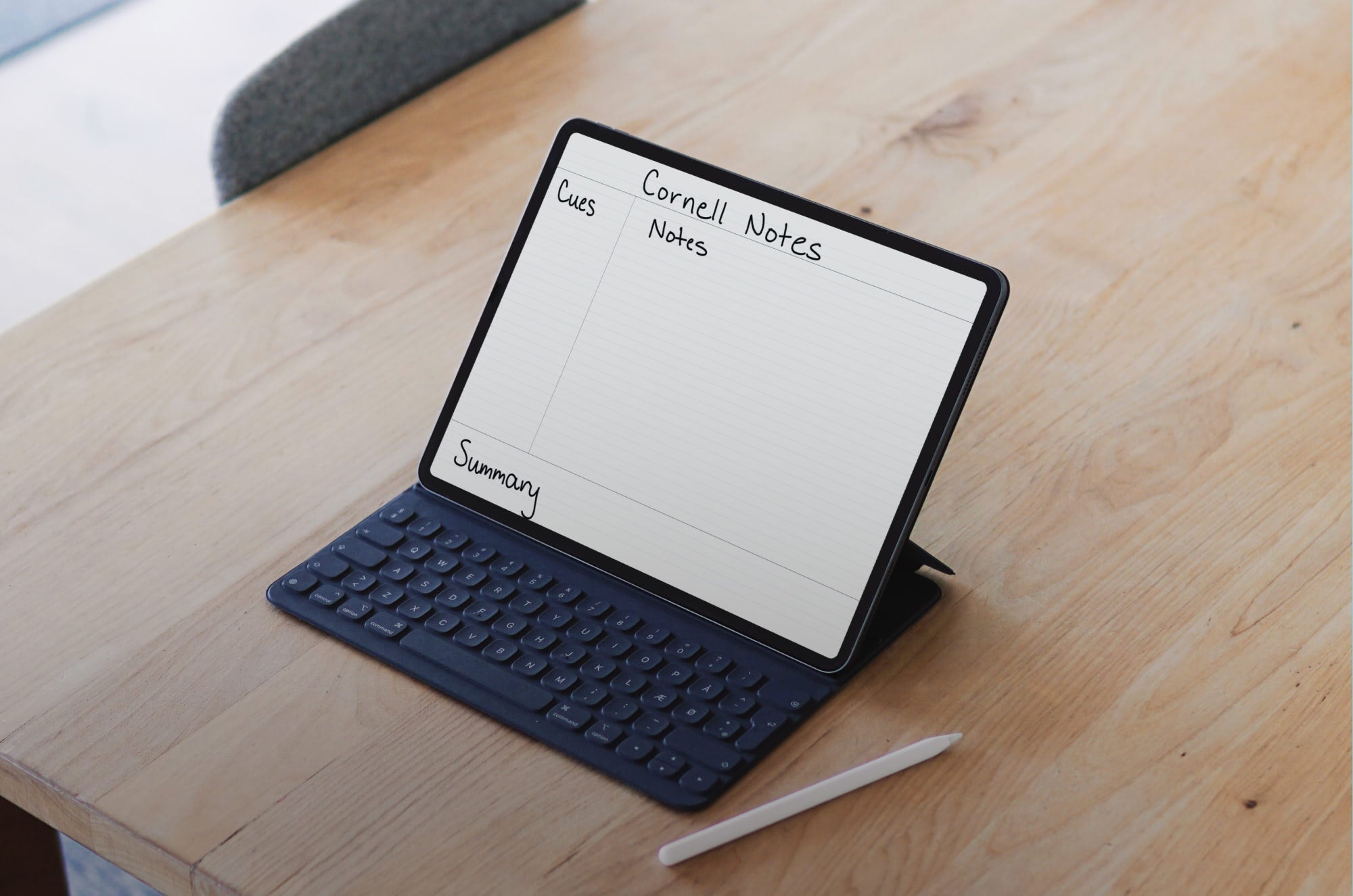
I like to use Notability for this method because it has built-in Cornell note-taking templates, which are great for this method. The Cornell method already has a whole section devoted to questions.
Example: The American Revolution
Instead of just memorizing the facts, the dates, the people involved, or the causes, elaborative interrogation makes you ask questions to find out how to connect these facts.
You might know that the American Revolution started because of taxes, but ask why those taxes led to the rebellion and how they contributed to the tension between the colonies and Britain. Then consider how those factors influenced one another.
Spaced repetition
| What it is | A review strategy that revisits information at intervals over time to improve long-term retention. |
| Best for | Learning and retaining information over days or weeks in preparation for exams. |
If there’s one study habit I’d encourage students to build, it’s spreading their sessions out over time instead of leaving everything until the night before an exam.
Between classes and extracurriculars, you’ve already got a lot going on, which makes it easy to put off studying until you have to cram. Unfortunately, that rarely results in acing your exams.
With spaced repetition, you set up your study sessions over days or weeks. This method works because when you revisit information after a little time has passed, you have to work harder to bring it back to mind. That effort helps strengthen your memory, and each review gives your brain another opportunity to reinforce what you’ve learned.
Again, both Notability and Goodnotes tie for the best app when using spaced repetition. That’s because they both use AI features (Goodnotes’ Study Sets and Notability Learn) that already integrate spaced repetition into their tools.
Example: Spanish vocabulary
An easy example is a language class because there are so many new words to learn. Create flashcards and start by testing yourself on the words today. Review them again in two days, then a few days later, and so on.
Spaced repetition also works well if you focus on the words you keep forgetting and increase the time between reviews for the ones you already know well.
There is a typical schedule, which you can adjust as needed based on how soon your exam is. To learn more about this schedule and how to put it into practice, check out our full guide to creating a study plan and take a look at the image below.

The Feynman Technique
| What it is | A learning technique that tests understanding by simplifying a concept into a clear explanation. |
| Best for | Breaking down complex theories, processes, and unfamiliar concepts. |
As a writer, I spend a lot of time figuring out how to explain things clearly. I’ve learned that if I can’t explain an idea in a way that makes sense to someone else, I need to work through it a little more myself. It’s easy to hide behind complicated terminology, but that’s not the same as understanding it.
That’s the thinking behind the Feynman Technique. Named after physicist Richard Feynman, it involves explaining a concept as if you were teaching it to someone else. Much like self-explanation, except here you’re stripping it down into basic parts and putting it into simple language to make it more understandable.
When you get stuck or can’t explain something well enough, go back to your notes and figure out what you’re missing.
This is another one of those methods that is more in your head than on the page, so just use your favorite note-taking app on the iPad to take notes and write out your explanations.
Example: Cognitive dissonance.
If you haven’t heard of it, cognitive dissonance is the mental discomfort you feel when your beliefs, values, or attitudes conflict with your actions.
Does that definition help you understand the concept? Maybe, but if you had to teach the idea to someone else, what would you say?
You could describe what happens when someone’s actions don’t match their beliefs and give an example, such as someone who cares about the environment but regularly drives short distances instead of walking or biking or taking the bus.
Explain why that mismatch might make someone uncomfortable and how they could potentially resolve it. If you can walk someone through all that, you have a strong grasp of the topic.
Study methods for managing complexity
I don’t know about you, but I struggle when topics get complicated, whether it’s just a ton of information or a lot of connected ideas. I just can’t seem to figure out what information matters the most.
These three study methods help you organize what you’re learning, so you can work through the material without getting overwhelmed.
Interleaving
| What it is | A practice strategy that mixes different topics or problem types within a study session. |
| Best for | Learning to distinguish problem types and choosing the right approach to solve them. |
Have you ever practiced something over and over until you felt like you’d finally got it, only to get stuck on the exam when the question was worded differently? (That’s not just me, right? Right??)
That’s one of the reasons that interleaving is such a great method to put into practice. You mix different types of problems or topics into one study session, instead of working through one entire set before moving to the next. That forces you to stop and think about what each question is asking before deciding how to approach it.
I like Quizlet for interleaving. It’s a digital flashcard app, and although you can’t mix up decks and study them all at once, you can create a deck with a mix of topics. It also offers other study options, like practice tests, which you can set up with different types of questions, and it can create study guides based on your notes.
Example: Biology exam prep.
If you’ve got a final exam coming up, you’re going to need to cover a lot of ground. This isn’t just one chapter you’ve got to study. But instead of studying one chapter at a time, mix practice questions from several chapters.
For example, when you’re studying, you might answer a question about cell division, then one about genetics, then one about cellular respiration, and so on. For each question, figure out which concept the question belongs to and explain your answer before moving on to the next.
This helps you practice recognizing what a question is asking, rather than answering the same type of question over and over. You can also mix in different types of questions, like true/false, multiple choice, and short descriptions, so you never know what’s coming.
Mind mapping
| What it is | A visual method of organizing information around a central topic, with branches showing related ideas and connections |
| Best for | Brainstorming, connecting concepts, and organizing complex topics into a visual overview. |
Mind mapping is a technique that I use often for brainstorming and outlining my novel. I have to make sure I know how every piece of information fits together and what’s related to each other.
With a mind map, you start with a central idea or topic and then branch out into related ideas. Those branches can lead to subtopics of their own, too, with supporting details or examples. Sometimes you’ll find connections you didn’t even know were there.
It’s a way to get everything out of your head and onto the page, so you can see how it all relates. And unlike a traditional outline, you don’t have to have the order figured out ahead of time. You can move things around (especially if you’re using a note-taking app) and follow connections as they come to you.
The best apps for this are MyScript Notes, because of those boards that I mentioned earlier, or Apple Freeform, because it also offers a blank canvas where you can draw your mind map.
Example: Causes of World War I.
Write and circle “Causes of World War I” in the center of the page. From there, draw four main branches and label them as militarism, alliances, imperialism, and nationalism.
Add key facts, events, and examples under each branch as you review your notes. Then start looking at how everything connects. For example, how did nationalism fuel rivalries between countries? Add smaller branches to explore those relationships.
You can draw your mind map on paper or in an app like Goodnotes. It doesn’t have to look pretty. You’re just trying to untangle a complicated topic and spot connections you might have missed so that you understand the big picture.

The SQ3R method
| What it is | A structured reading method built around five stages: Survey, Question, Read, Recite, and Review. |
| Best for | Studying dense textbooks, academic chapters, and other substantial reading assignments. |
Reading your textbook is a slog (usually), and chances are you won’t remember half of what you read. Hopefully you did some highlighting and took notes along the way.
Next time, try the SQ3R method. It includes five steps that help you be more intentional about your reading. First, Survey the chapter to get an overview of the material. Question what you want to learn from it. Read to find the answers. Recite the main points from memory, without looking at the book. Finally, Review the material to check what you’ve missed.
I like that this method gives you something to do at each stage, rather than asking you to read a chapter and hope everything you learned sticks.
There isn’t an app for reading a textbook, but if you were using this method to read through a PDF or if you had a PDF version of your textbook, then something like LiquidText or MarginNote 4 would be good to use. Both of these apps let you pull excerpts and annotate PDFs, which would work well for SQ3R.
Example: Psychology chapter on memory.
For your psychology class, you’re reading a chapter on short-term memory, working memory, and long-term memory. Work through the five SQ3R steps like this:
- Survey: Skim the chapter title, headings, bold terms, diagrams, and summary. Notice that the chapter covers different types of memory and how information moves between them.
- Question: Turn the headings into questions you want to answer. What’s the difference between short-term and working memory? How does information get stored in long-term memory? And whatever else makes sense.
- Read: Read the chapter with those questions in mind. Look for the answers, and jot down a few key points under each question.
- Recite: Close the textbook and answer your questions from memory. Try explaining the differences between the types of memory without looking at your notes.
- Review: Open the chapter again and check your answers. Did you leave out any details or mix up two concepts? Go back over anything you couldn’t remember or explain clearly.
Bonus: A lot of textbooks include some practice questions at the end. If so, you’ve already got your question step covered without having to do the work yourself.
How to choose the best study method for you
All of these study methods are great, and you can mix and match depending on the class or topic you’re studying.
Not sure where to start? Take our study techniques quiz to find out which methods might work best for you. You’ll get recommendations based on your goals and how you like to study, so you can spend less time guessing and more time studying.

Make studying feel more hands-on with Paperlike
All of these study methods involve doing something with the information, whether that’s taking notes, sketching a mind map, working through practice problems, or writing out explanations in your own words. Your iPad makes it easy to keep all that work in one place, but the slippery screen makes it hard to write on.
A Paperlike Screen Protector adds friction to the surface to make it feel like writing on paper, giving your Apple Pencil more control when you’re drawing a diagram or working through a tricky problem.
Frequently Asked Questions
How do I study effectively?
A: Start by choosing a study method that matches what you're trying to learn. Use active recall and spaced repetition to memorize facts, the Feynman Technique to understand complex concepts, or mind mapping to connect ideas. Whatever method you choose, practice actively instead of relying on rereading your notes, and spread your study sessions over time.
How do I build effective learning strategies?
A: Experiment with different study methods and pay attention to what helps you remember and understand the material. You might use flashcards for vocabulary, diagrams for complex processes, and practice questions to prepare for exams. Once you find what works, build those methods into a regular study routine.
How do I develop study habits?
A: Start small and make studying part of your regular schedule. Set aside specific times to review your notes, practice recalling information, or work through challenging concepts. Break larger tasks into manageable sessions, keep your study materials organized, and avoid leaving everything until the night before an exam. Consistency matters more than marathon study sessions.
How do I find a study method that works best for me?
A: Think about what you're trying to accomplish and where you tend to struggle. Do you need to memorize facts, understand complicated ideas, or see how different concepts connect? Use those goals to narrow down your options, then experiment with a few methods. You can also take our study techniques quiz to find methods that may suit your learning preferences.
Read next

 Lindsay Armstrong
 Lindsay Armstrong
